

Every town has a beginning.
For Arbuckle, that beginning almost never happened.
More than 150 years ago, western Colusa County stood at a crossroads. A railroad was searching for the best route through the valley, and the decision of one community forever change the landscape.
Today, if history had unfolded differently, travelers on Interstate 5 might be passing through College City instead of Arbuckle.
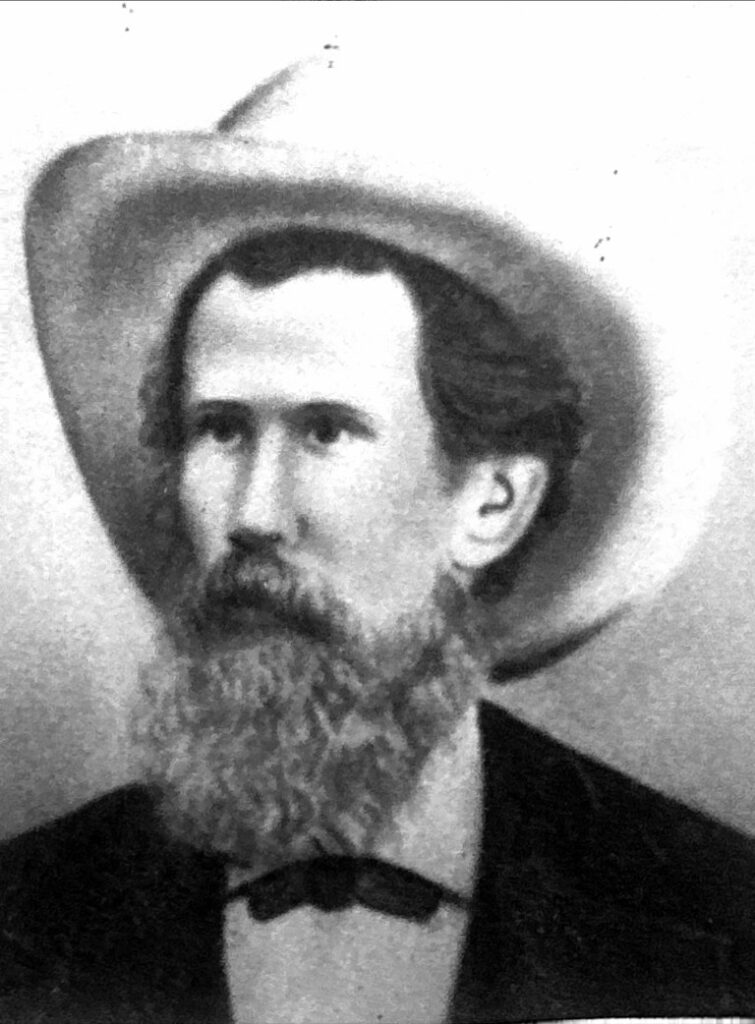
The story of Arbuckle begins with Andrew Peirce.
Many residents today may recognize the name through Pierce High School. Andrews surname was originally spelled “Peirce,” and it wasn’t until years after his death that the spelling evolved into the modern “Pierce” used in official records and by the high school.
Born in Massachusetts, Andrew a shoemaker by trade came to California in 1849 during the Gold Rush. Rather than searching for gold, he made his living hauling freight by ox team between Sacramento and Shasta.
During one freight trip, Andrew survived an attack by Native Americans after being shot in the back. Not long afterward, while cutting wild oats for hay, he and his wagon were overtaken by a prairie fire. The flames badly burned his face and nearly destroyed his hands. Though he recovered, the scars remained for the rest of his life.
In 1855, he settled near what is now College City, where he built a successful sheep operation. Known for raising purebred breeding rams.
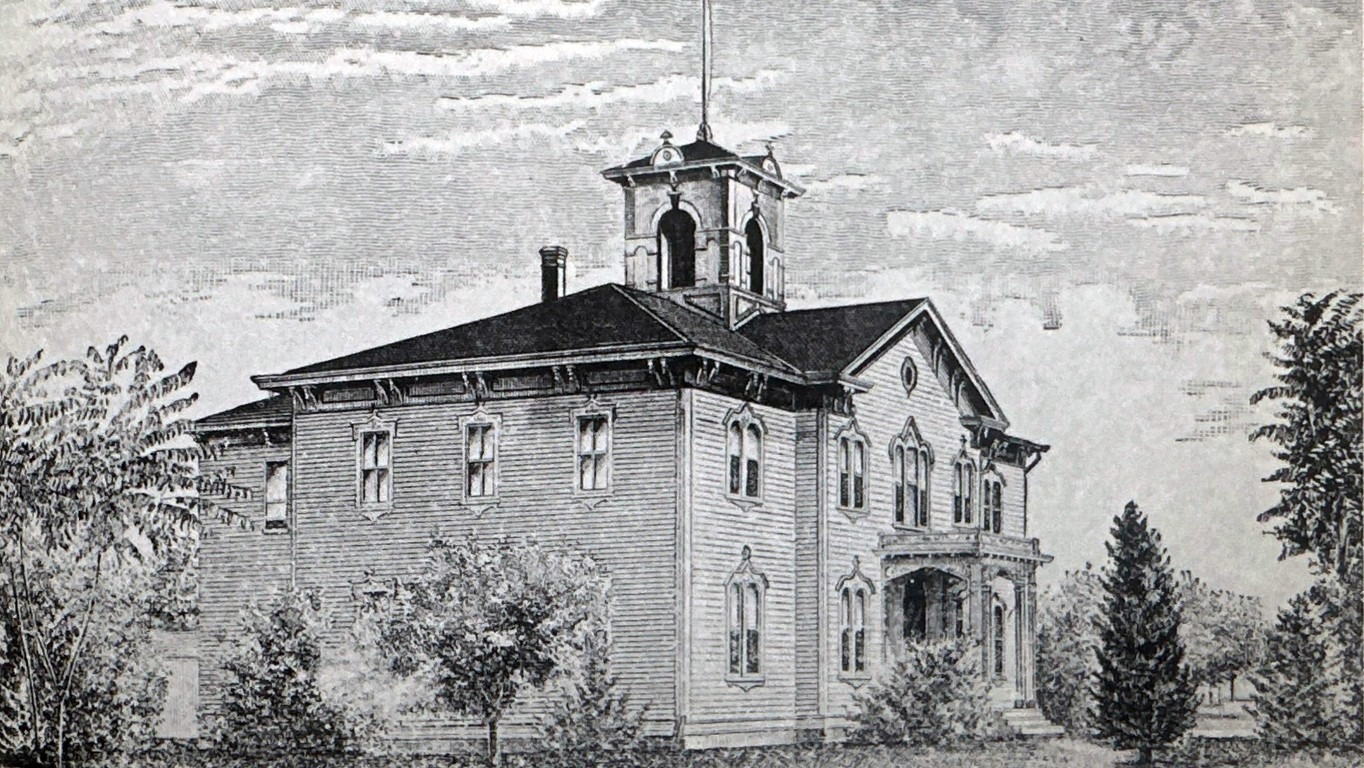
At the age of 48, Andrew died of consumption on April 25, 1871. He left much of his estate to establish a Christian college in the town now called College City.
The College City Post Office opened in 1873, and the community quickly began to grow. A January 1875 newspaper described a thriving settlement with two general stores, a hotel, livery stable, saddler shop, shoe shop, blacksmith and wagon shops, a butcher shop, a bakery, boarding houses, a drug store, millinery and Chinese wash houses.
On Sept. 14, 1875, the Peirce Christian College opened its doors to both young men and women, becoming the heart of the growing community.
It appeared that College City would become western Colusa County’s next major town.
With College City located 16 miles south of Colusa and nine miles west of the Sacramento River, it seemed like the natural choice when the Northern Railway searched for a route through the region.
Residents gathered to discuss the railroad proposal. While many communities fought to attract the railroad, College City’s citizens had concerns. They feared the trains would bring transients and disrupt the peaceful atmosphere surrounding the Christian college.
They chose to reject the railroad.
However, just a few miles away, another man saw an opportunity.
Tacitus Ryland Arbuckle was born March 6, 1835, in Lexington, Missouri. At 19, he headed west after hearing stories of California’s gold fields. Like countless young men, he tried mining on the Russian River before seeking silver near Virginia City, Nevada. When those endeavors ultimately failed, he turned to ranching in Napa and Mendocino counties.
Around age 20, he married Amanda Mevina Tinker. Together they raised 14 children.
By 1866, the Arbuckle family settled in Colusa County, where Tacitus built a ranch of more than 7,320 acres devoted to grain, cattle and timber.
When he learned College City had turned away the railroad, Tacitus wasted little time.
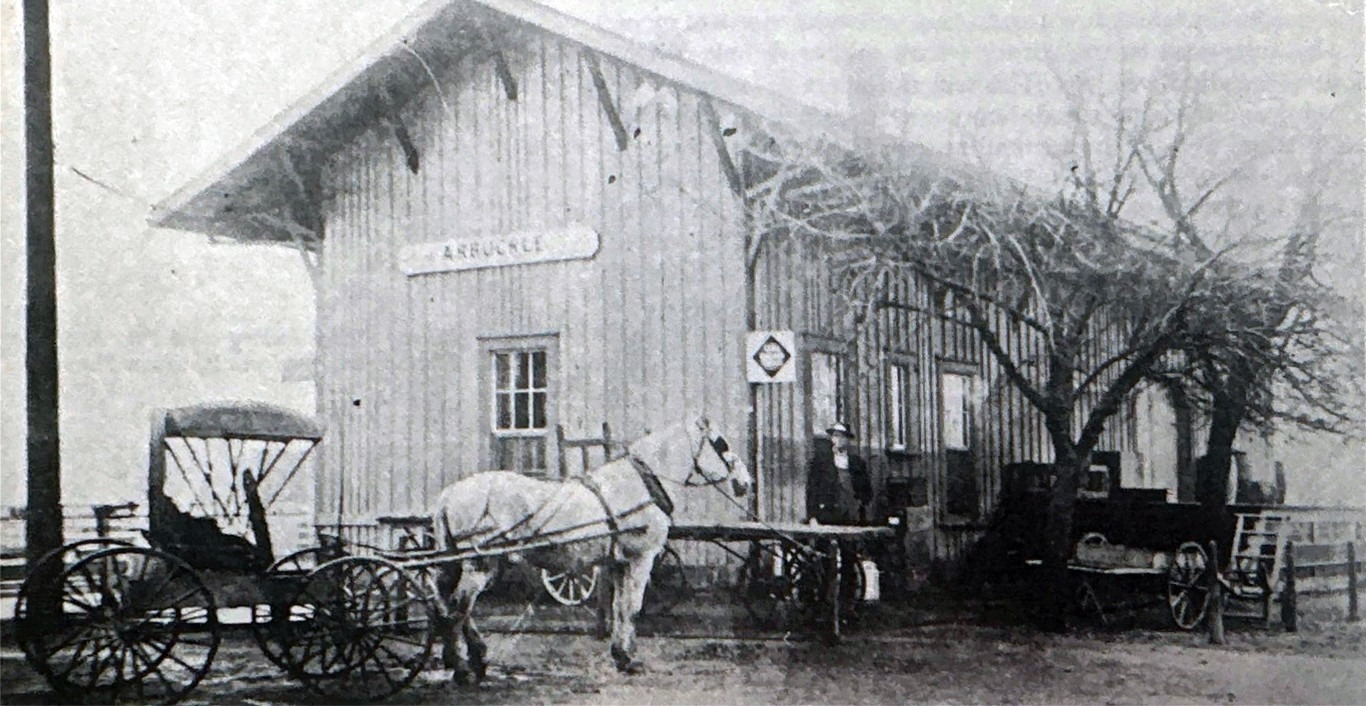
He offered the railroad a route across his own land, they accepted; a new town was born.
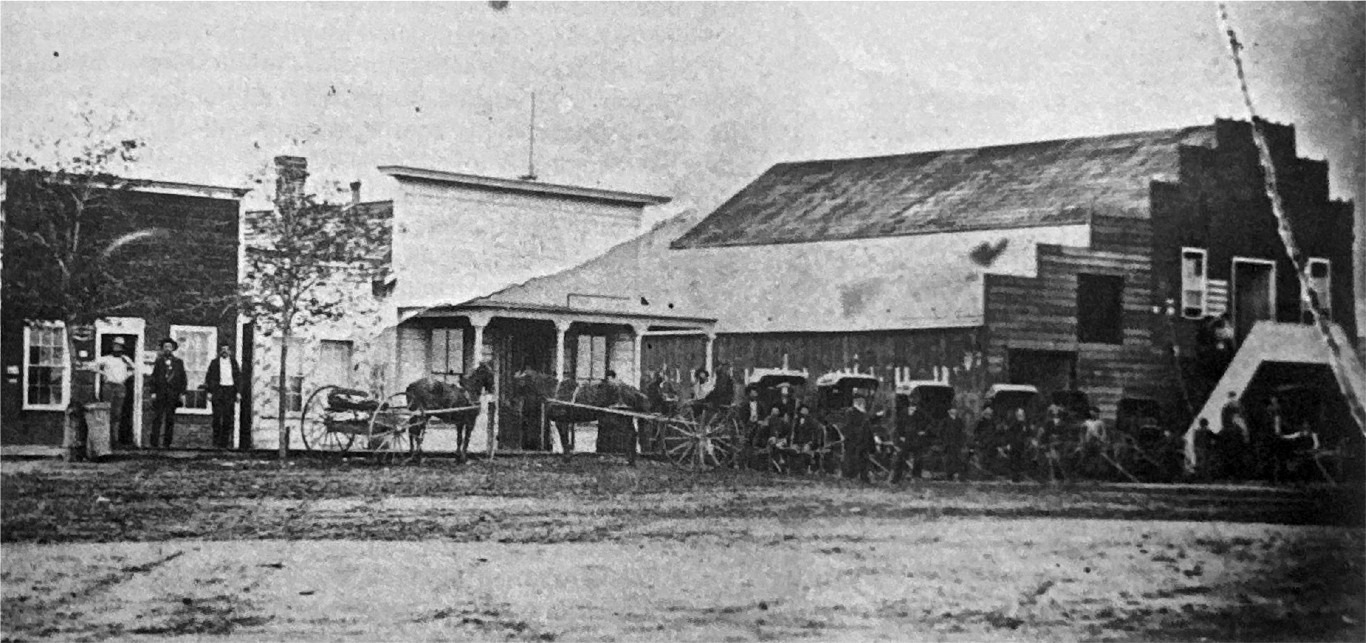
Determined to build a community around the new depot, Tacitus offered free nails to anyone willing to purchase a lot and build a home. The unusual incentive encouraged families and businesses to settle in the new town.
The town was officially established in 1875 with the first buildings built by William Dalbrow and John C. Ward, both Confederate Civil War veterans.
Tacitus opened a harness shop and worked as a carpenter and contractor, building many of the town’s earliest structures.
Within the first year of the town, a major fire destroyed many of the buildings Tacitus owned, wiping out much of his investment. Faced with a financial hardship, he published a notice in the Colusa Sun on Jan. 8, 1876, offering to sell his remaining interests while promoting the newly established depot.
“[The town] is situated in the heart of a fine agricultural country, free from all malaria, and destined to be a great trading center,” Arbuckle wrote.
On July 4, 1876, the first train pulled into the new depot, the town came alive.
Within months, Arbuckle had grown from just seven or eight families into a community of roughly 300 residents. A schoolhouse was built, and businesses multiplied. The railroad transformed the tiny settlement into a trading center for the surrounding farms.
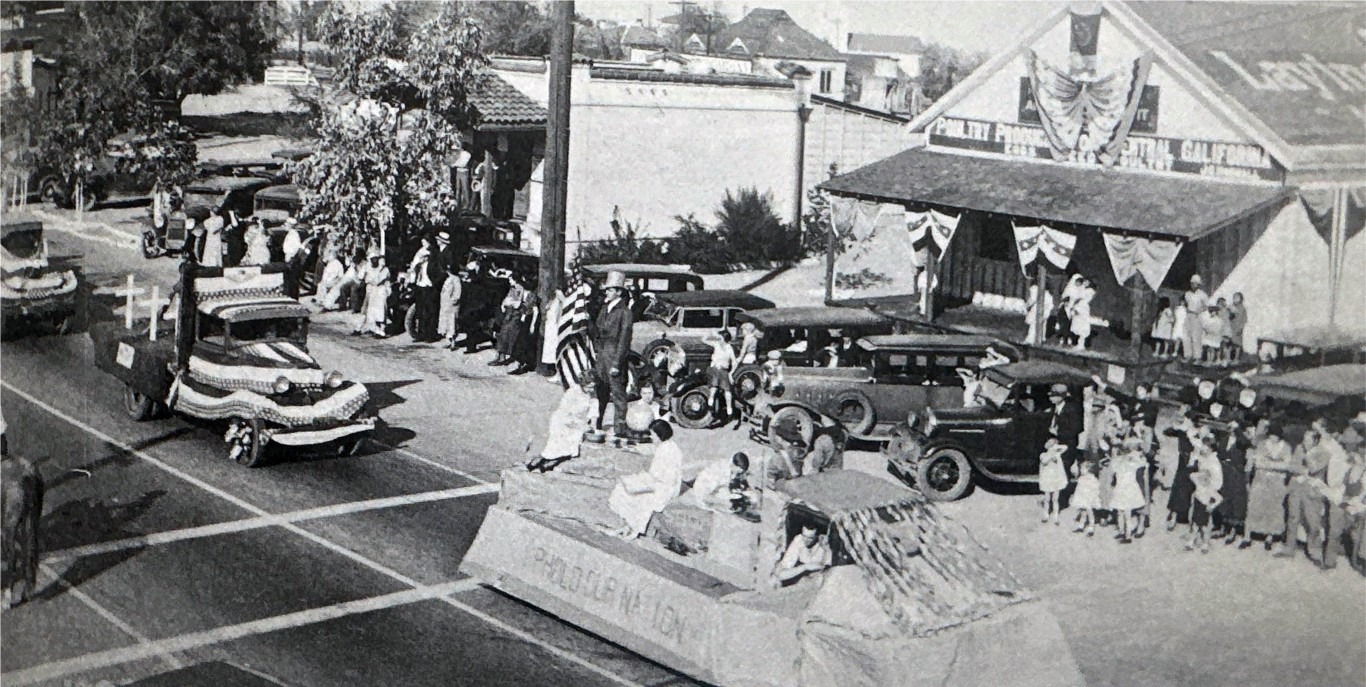
Later Tacitus built a livery stable that accommodated about 30 horses. Located in what is now the Redington Block on Fifth Street. His business also served as the town’s post office, where he served as postmaster from December 1885 until February 1886.
Misfortune struck again.
On Dec. 19, 1878, fire swept through town, destroying the livery stable, post office and three neighboring businesses. Without insurance, Tacitus suffered another devastating financial blow from which was said that he never fully recovered.
He and his family eventually left Colusa County for Douglas City in Trinity County.
Tacitus died on July 4, 1889 and buried on his ranch near Scotts Valley in Siskiyou County.
Although Tacitus left Arbuckle, the town that bore his name, the community continued to thrive.
In 1908, residents celebrated the first Almond Day with a parade followed by baseball games, track competitions, horseshoe tournaments, wrestling matches, concerts, carnival attractions, vaudeville performances, exhibits, dancing and the crowning of the Almond Queen at Balfour Park.
By 1917, the celebration had grown into Colusa County’s first county fair. The fair moved to Colusa in 1922.
While the Almond Festival and county fair eventually disappeared from Arbuckle, rodeos were held and became popular during the 1950s.
In 1976, the town celebrated its centennial. Descendants of Tacitus Arbuckle returned to honor the founder. Two years later, on March 18, 1978, Jack Arbuckle of Fresno and Jim Arbuckle joined members of the Sam Brannan Chapter of E Clampus Vitus in dedicating a monument to Tacitus Ryland Arbuckle at Triangle Park on Fifth Street.
In 1984, the Mountain Charlie Chapter 1850 of E Clampus Vitus erected a marker at Tacitus Arbuckle’s gravesite near Callahan, preserving another chapter in the story of the man whose decision changed western Colusa County.
Today, thousands of motorists pass through Arbuckle every day, many without realizing the town exists because of two choices made more than 150 years ago.
A few interesting facts about Arbuckle
The Pierce Bell – The bell displayed in front of Pierce Joint Union High School once hung at Pierce Christian College. After the college was demolished, the bell was moved several times before finding a permanent home in front of the high school in 1948 as a tribute to Andrew Peirce.
Arbuckle Food Center – Before moving to its current location on Amanda St., Arbuckle Food Center operated on the corner of Laurel and Fifth streets. The building is now home to El Jalisciense. The establishment also housed the Almond Tree Restaurant in the late 70’s and 80’s.
A Building with Many Lives – The building that now houses El Capi has served many purposes over the years. It once operated as a Pizza Factory restaurant, a video and pet store, and for many years was home to Denny’s Hardware.
The Fire Hall Came from Camp Beale – Arbuckle’s Fire Hall at Lucas and Sixth streets has an unusual history. The building was purchased as military surplus from Camp Beale, now Beale Air Force Base, after World War II. About 70 percent of the camp’s buildings were sold and moved elsewhere, and the fire hall was one of them. Contractors transported the structure to Arbuckle in six sections. The move and construction of a foundation cost $1,650, while volunteers donated the labor to complete the building. It was dedicated on July 23, 1949.
Three Hotels, Two Fires – Arbuckle has been home to three hotels. The American Hotel, at Hall and Fifth streets, burned in 1900. It was replaced by the Hotel Ash, built by Capt. William Ash. That hotel was destroyed in 1918 after an engine backfired inside Sanders’ Garage at Amanda and Sixth streets, igniting a fire. The Arbuckle Hotel was built in its place and still stands today.
The Search for Homegrown Rubber – Arbuckle briefly became part of an effort to grow rubber in California. In 1926, Ralph Hastings believed the area’s climate was ideal for cultivating guayule, a desert shrub used in attempts to produce natural rubber. Working with the Arbuckle Land Corporation, a five-acre test plot was planted on Wildwood Road, but the effort failed. During World War II, the federal government revived the experiment and secured a 10-year lease on the property. By 1944, the project was abandoned after the plants failed to produce rubber commercially. Researchers also found notes in Thomas Edison’s papers documenting his own unsuccessful attempts to extract rubber from guayule.
A German Prisoner of War Camp – Few people realize Arbuckle once hosted a German prisoner of war camp. On March 14, 1945, the U.S. Army opened a 250-man camp at the abandoned guayule labor camp. It operated as a branch of the much larger prisoner of war camp at Camp Beale. German prisoners worked primarily on local farms while also attending civics classes, known as denazification courses, and participating in music and sports programs. As prisoners returned to Germany in late 1945 and early 1946, the camp was returned to the U.S. Department of Agriculture and again used as a farm labor camp. In 1948, the federal government sold the property to Robert F. Alexander, who converted the barracks into apartments and the mess hall into a bar and general store. The community became known as Alexander Camp and remained largely intact until the late 1970s, when the remaining buildings were removed to make way for the Alexander Apartments. Today, the former camp site is home to the Tim Lewis housing development, with Tacitus Street running through the middle of what was once the camp.
College City’s Loss Became Arbuckle’s Gain – College City lost more than just its college. It also lost the railroad and eventually Pierce High School. In 1935, residents successfully petitioned for a change-of-site election to move the high school to Arbuckle. Voters approved the move by a two-to-one margin and later passed a $125,000 bond measure to build a new campus. The school ultimately cost $181,818 to construct and opened its doors in 1937, where it continues to serve students today.
Tacitus Arbuckle Tried Again – According to local accounts, Tacitus Arbuckle Jr. hoped to have another town bear his name. It is said he attempted to establish a community in Tehama County, although the effort never succeeded. Interestingly, the 1888 “Atlas of the World,” published by McNally Standard, shows an “Arbuckle” in the area where the proposed town was rumored to have been located. Whether it reflected a planned town or simply a cartographer’s mistake remains unknown.
Arbuckle’s Studebaker Legacy – Arbuckle once played an important role in California’s Studebaker history. In 1889, Alex Atran opened a blacksmith shop and livery stable before becoming a dealer for Studebaker wagons. When Studebaker expanded into automobiles, the Atran family followed. It was once said that if someone bought a Studebaker in California, there was a good chance it came through Arbuckle. Studebaker ceased automobile production in 1966.