

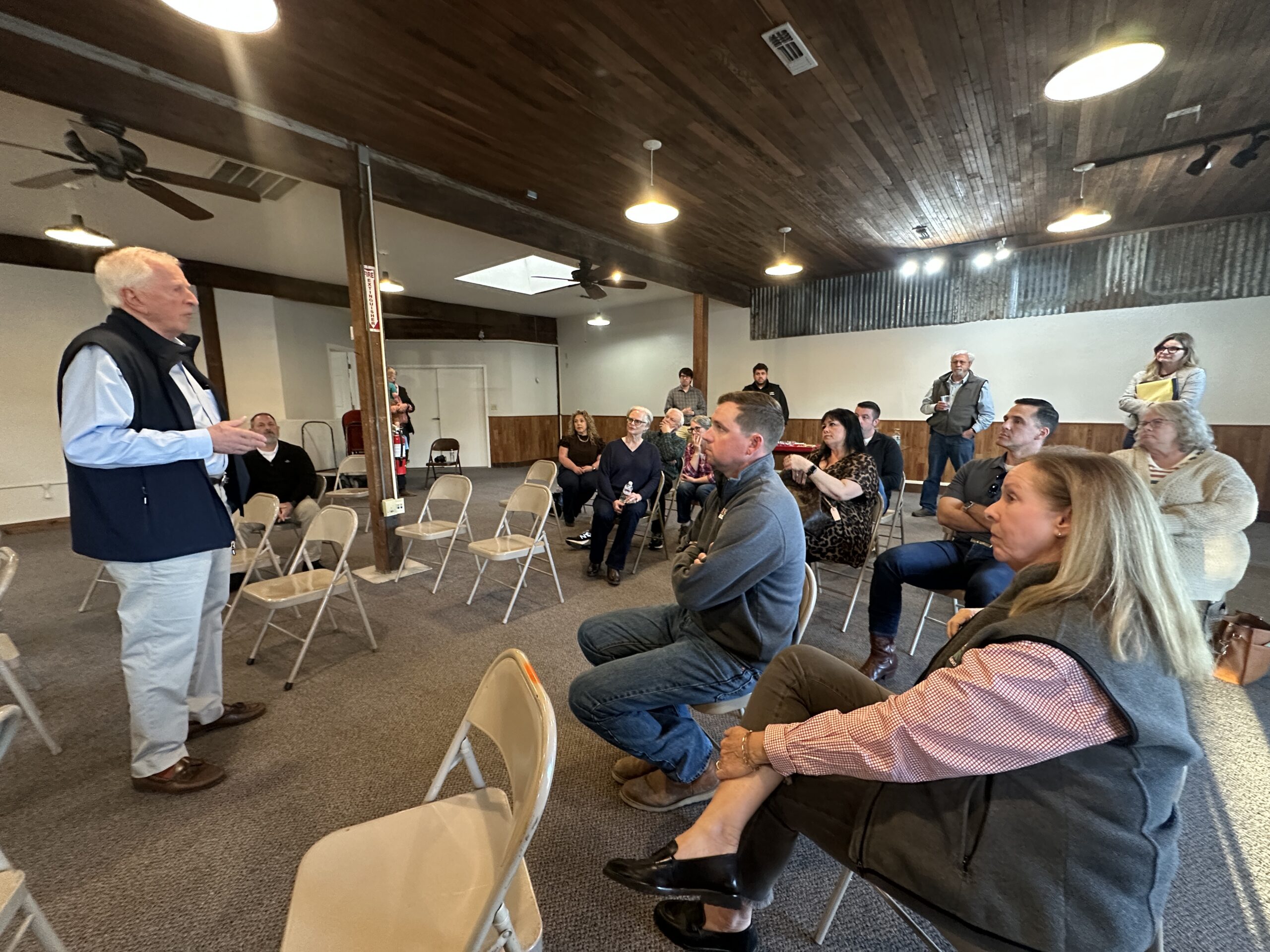
 COLUSA, CA (MPG) – U.S. Rep. Mike Thompson met Friday, Feb. 6, with Colusa County and city officials for a wide-ranging discussion that focused on agriculture, water rights, health care, infrastructure, immigration and federal funding formulas that affect rural counties.
About 20 local representatives attended the meeting, using the opportunity to question Thompson directly on how federal policy decisions translate to small counties with limited population but significant agricultural production.
Several questions centered on agriculture and trade. Local officials described rising uncertainty tied to tariffs, export markets and labor shortages. Thompson said farmers across Northern California are feeling pressure from trade disruptions and said tariffs have had ripple effects beyond individual growers.
“It’s not just the farmer who gets hit,” Thompson said. “It’s the hospital, the car dealer and the entire community.”
Thompson said he has raised concerns with federal trade officials and supports returning greater authority over tariffs to Congress. He did not outline specific legislation tied to Colusa County but said agriculture remains a priority issue for him.
Water policy prompted pointed questions about north-of-Delta water rights and the balance between environmental regulation and agricultural needs. Thompson said he has consistently opposed efforts that undermine existing water rights and warned against policies that disrupt farming, wildlife habitat and drinking water supplies.
“When you start messing with water north of the Delta, you affect everything,” he said.
Health care access was another major concern. Local officials described the financial strain facing rural hospitals, including seismic retrofit requirements and cuts to federal health programs. Thompson said rural health systems are operating on thin margins and face long-term challenges regardless of party control in Washington.
He acknowledged that population-based funding formulas often disadvantage small counties and said rural communities struggle to compete for federal dollars.
“Counties with 20,000 people don’t get treated the same as counties with millions,” Thompson said.
Infrastructure questions focused on roads, water systems and sewer projects. Officials described high per-household costs and limited local revenue. Thompson said infrastructure needs are widespread in rural America and said existing funding levels fall short.
“There isn’t a small town anywhere that has all the infrastructure money it needs,” he said.
Immigration policy drew discussion about the role of undocumented workers in agriculture and local economies. Thompson said farm labor shortages cannot be solved without reforming the immigration system and described immigrant workers as essential to rural communities.
“They’re not just workers,” he said. “They’re part of the community.”
Thompson also addressed questions about bipartisanship, citing past efforts on disaster tax relief, agriculture and health care. He said bipartisan legislation is more likely to endure but acknowledged the current political climate makes cooperation difficult.
Throughout the meeting, local officials pressed for clarity on how rural counties can ensure their needs are not overshadowed within large congressional districts. Thompson said he intends to remain accessible and responsive.
“I’ll listen, and you’ll always know where I stand,” he said.
The meeting concluded without formal commitments but provided local leaders an opportunity to directly question a sitting member of Congress on issues that affect Colusa County’s economy and services.