

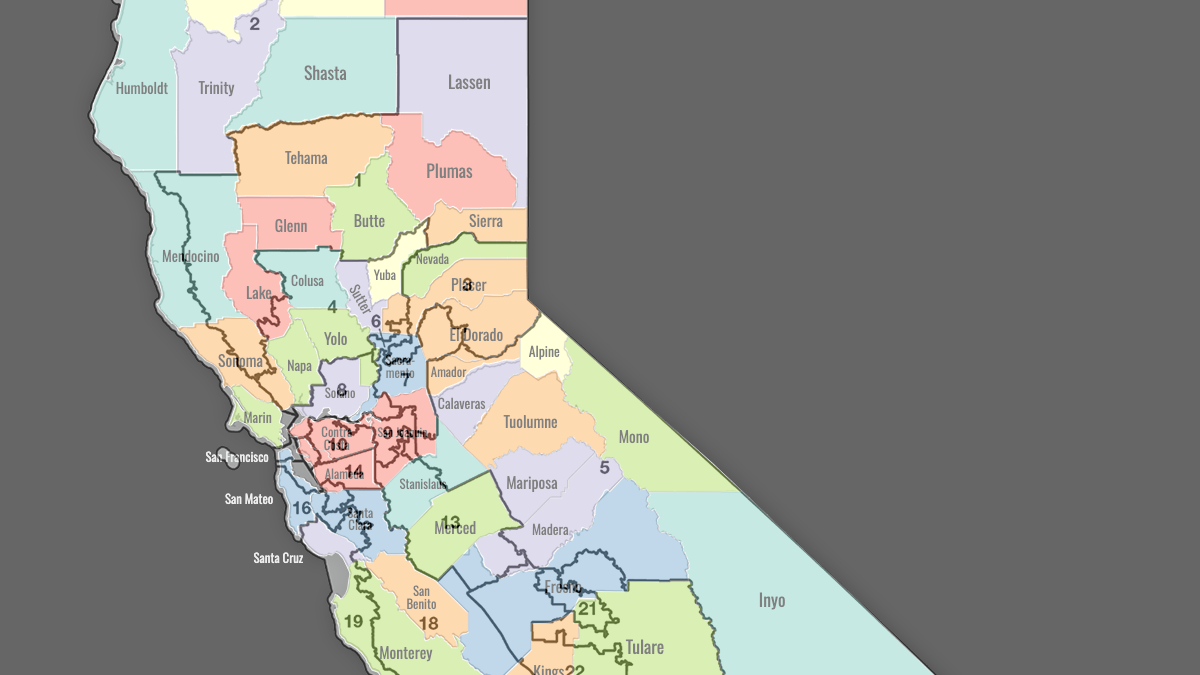
 SACRAMENTO, CA (MPG) – The U.S. Supreme Court declined this week to hear a Republican backed challenge to California’s new congressional map, leaving in place district lines adopted under Proposition 50 and clearing the way for the 2026 election cycle to proceed under the voter approved system.
The high court’s decision allows California’s updated map to stand after a lawsuit filed by state Republicans argued the ballot measure violated the U.S. Constitution. The challenge was supported by the U.S. Department of Justice during the Trump administration.
By refusing to disturb the lower court rulings, the Supreme Court effectively ended the legal effort without issuing an opinion.
Gov. Gavin Newsom framed the decision as a rebuke of partisan redistricting efforts that originated outside California.
“Donald Trump said he was ‘entitled’ to five more Congressional seats in Texas. He started this redistricting war. He lost, and he’ll lose again in November,” Newsom said in a prepared statement.
Attorney General Rob Bonta said the ruling preserves a process voters intentionally approved to counter partisan manipulation.
“The U.S. Supreme Court’s decision is good news not only for Californians, but for our democracy,” Bonta said. He added that Proposition 50 passed after former President Donald Trump urged Texas Republicans to redraw congressional lines to gain additional seats.
According to Bonta, California lawmakers responded by advancing the measure to voters, who approved it statewide. He said his office has now defended the initiative seven times in court.
While the legal battle played out at the national level, the outcome carries practical consequences for rural counties in Northern California, including Colusa County, where congressional boundaries influence how agricultural, water and infrastructure issues are represented in Washington.
With the map finalized, local election officials and potential candidates now have certainty heading into the 2026 cycle, avoiding what could have been months of confusion or last-minute changes.
Republican leaders criticized the court’s refusal to intervene, arguing the map advantages Democrats. However, courts that previously reviewed the case found the measure fell within California’s authority to regulate its own elections.
The Supreme Court’s action does not set precedent but signals the justices were unwilling to reopen the dispute.
For now, California’s congressional districts remain unchanged, and the fight over redistricting shifts back to the ballot box.