

In a typical August, Colusa County rice fields would be lush green as the grain begins to flower and ripen.
Colusa County is the top producer of rice in the Sacramento Valley – and historically harvests about 650,000 tons of mostly sushi rice on 140,000 acres in a normal year.
But this year, only a fraction of that rice, typically destined overseas and to U.S. food processors and restaurants, will be produced, costing farmers, workers, suppliers, value-added businesses, and local government coffers hundreds of millions of dollars after the state reallocated most of the region’s surface water to environmental and downstream urban uses.
What little water was allocated to rice farmers this year was sold off just to keep local almond trees alive, after a freeze in February resulted in the loss of 74 percent of the county’s leading crop.
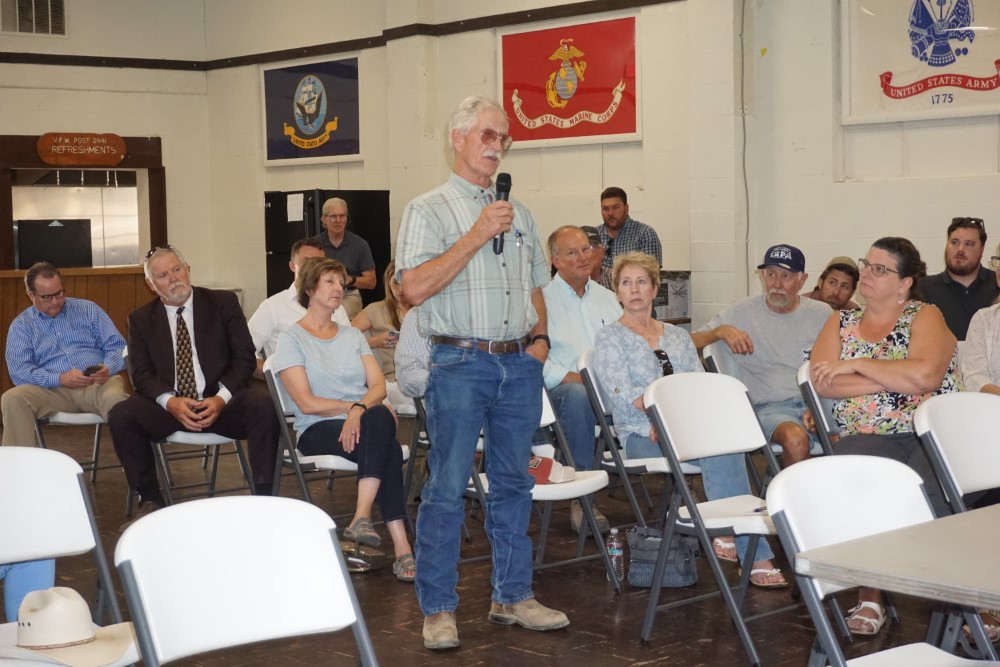
The $1 billion devastation to the local economy is unprecedented, said California Department of Food and Agriculture Karen Ross, who, along with Undersecretary Christy Birdsong, met with those most affected by extreme weather and shrinking water resources at a community meeting at the VFW hall in Colusa on June 27.
“It’s unprecedented in an area that is known for being water rich… and known for being the origin of water that so many times in droughts like this becomes the origin of any transfer water.”
The impacts of the drought run deep, according to dozens of Colusa County farmers, residents, laborers, and suppliers, who pleaded with Ross for the state to deploy emergency programs that would help protect the local agriculture industry through the crisis.
Without assistance, they said, generations of local heritage and their place in the global market are at risk.
“I look at the counties that supply the food for the United States and the rest of the world like a tree in that we have to feed it enough to keep it around,” Princeton rice grower John Garner said. “If the laborers leave and the businesses close down and the parts stores close, you just lost the ability to restart the industry. The agriculture industry just doesn’t start up.”
Sarah Reynolds, who helps operate a highly diversified family farm, which includes seed crops like butternut squash and cucumbers, said she is not only worried about their future, and whether they can keep it going as costs soar, but the future of farming, in general.
“It’s been snowballing from what I can see, and the water part of it has added something that I feel is going to break the backs of the gowers,” Reynolds said. “I don’t know what the answer is, but I think we have a much bigger problem happening. We have to be more proactive about it if we want any of the younger generations to do what we are doing.”
Reynolds said in addition to drought being a “horrible layer on this cake,” farmers have been facing astronomical input costs the past two years, with heavy increases on fertilizer, a 70 percent increase on chemicals, a 60 percent increase on fuel, and 20 percent increase on pumping costs.
Blake Vann, who farms tree crops and rice on the west side of the valley, said that farmers have faced one thing after another with skyrocketing costs, drought, and a frost hitting the trees.
“It’s just one of the most difficult years,” Vann said. “My father here with me said he’s never seen a year this hard in his life. It’s super challenging and really difficult because water is life. It seems like continually, every year, more of the water is taken from us to be able to farm and run out to the ocean for fish and other things. I don’t really mean to attack the fish, but we need to get our priorities straight in this state and what’s really important and what isn’t.”
While some farmers said they can survive and retain some employees this year with crop insurance, they believe that crop dusters, farm supply stores, mills, and other auxiliary businesses could go under because fields are empty, resulting in a total collapse of the local economy as laborers move on to other communities – creating ghost towns similar to gold and silver running out.
To Secretary Ross, farmers not only expressed a need for immediate drought relief but for the state to fasttrack the building of the Sites Reservoir, because “if climate change is real,” the future holds the likelihood of extremely wet years, followed by longer periods of drought.
Rick and Brenda Richter, who started their crop dusting business in Maxwell with one airplane in 1983, has eight airplanes 30 years later – but few rice fields to spray.
“If we were at full plant, we would do 50,000 acres,” Richter said. “This year, we did 7,000. There are 20 employees that we didn’t hire.”
Richter said with the state escalating the taking of water from settlement contractors over the past few years, he fears California agriculture will not stand up to the state with their concerns.
“This is critical,” Richter said. “This state has got to have the infrastructure and food that feeds the world.”
While drought may be transitory, the loss of nearly all Colusa County’s rice crop this year could have more serious repercussions than laborers moving on to where there is work.
Steve Sutter, of California Heritage Mills, said quality sushi rice not grown this year won’t be served on dinner tables next year, leaving the industry vulnerable to U.S. food producers switching to rice from Argentina, Vietnam, or South Korea, should they find availability more reliable than California, which currently grows almost 100 percent of the nation’s medium grain sushi rice.
“Our concerns are longer term,” said Sutter, who is already seeing unprecedented amounts of imports of less quality rice from other countries. “Lost markets are hard to recover.”
Colusa County Supervisor Densie Carter, who invited Ross to hear Colusa County’s plight, said the two-hour listening session was both interesting and depressing, as 23 representatives from local farms, businesses, and the community spoke about the impacts, challenges, and assistance needed, including additional food resources for those who are insecure, in face of 82 percent loss this year of surface water diversions.
“I believe the session was felt deeply of the personal sacrifices that farmers and local businesses are making right now in the hopes that the water situation will be better next year, keeping as many employees as they can afford,” Carter said.
While Ross said she could help with additional food resources now, Carter said the bigger issues facing the community will take advocacy at the state and federal level, which is already being worked on by the farming, water, and support industries, along with county representatives. ■