

With California Gov. Gavin Newsom boasting a $75.7 billion general fund surplus across two fiscal years, local leaders are urging cities, counties, and Chambers of Commerce to begin demanding more return on the taxes they produce.
Former Williams Mayor John Troughton said cities must demand that the state fix inequities in the sharing of tax revenue by pressuring lobbying groups like the League of California Cities and Rural County Representatives of California to take on the fight.
The League of California Cities is currently considering a proposal submitted to them by the City of Rancho Cucamonga that would call on the state to enact “a fair and equitable distribution” of the 1 percent sales tax from in-state online purchases.
Until this year, tax revenue from online sales (Amazon, Walmart, etc.) were disbursed based on the customer’s location, going to the local municipality where the product was delivered. But as of March, the practice changed to give the tax revenue to the municipality from which the item was shipped, the location of the fulfillment center.
The change resulted in a tremendous loss in sales tax revenue for local jurisdictions, adding to the already unfair distribution of fuel taxes.
Troughton wants the League of California Cities to expand the fight to demand a greater percentage of all revenue generated by a tax on goods, services, and fuel.
Although Troughton is the elected treasurer for Williams, he said this is a personal mission to rally support for bringing the revenue distribution formula for sales and use taxes, as well as gas tax distribution, into the 21st century.
“The Bradley Burns tax started in 1949,” Troughton said. “It was a 3 cent tax (on $1) that was all state; there was no local tax on that. In 1950, they added a penny for the local jurisdiction, and over the years, that 1 cent stayed the same.”
For Williams, the approximate $8 million in sales taxes generated in the city on goods and services is sent to fill state coffers. The City of Colusa and County of Colusa are equally crushed under similar demands, while roads deteriorate and services to the public dwindle, Troughton said.
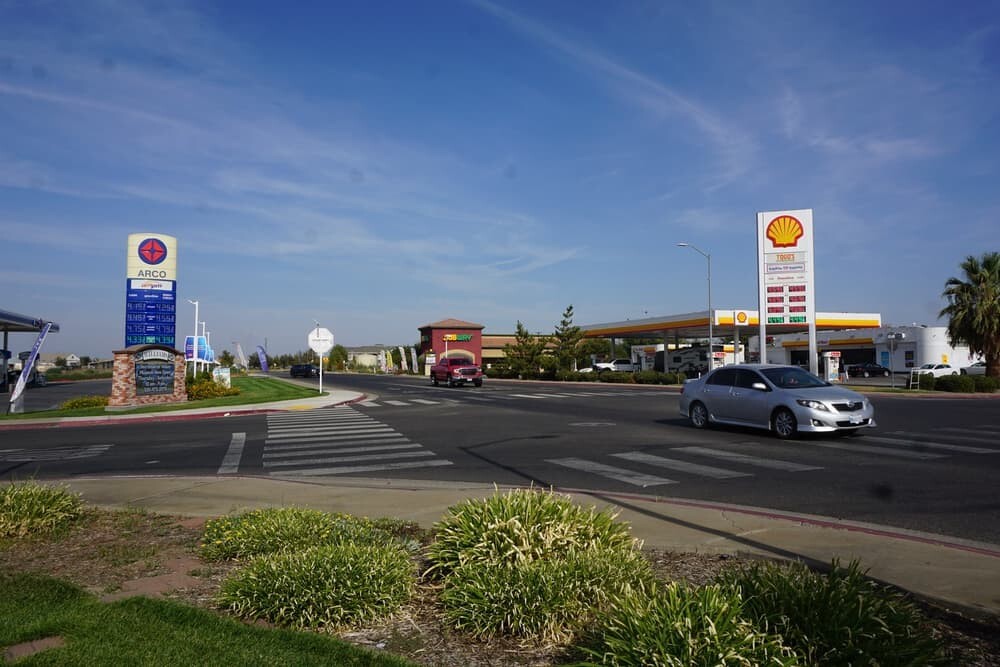
Throughton also estimated that Williams contributes about $5 million alone on fuel excise taxes annually, only to get back about $100,000 because the state distribution formula is based on population.
Throughton believes it will take a joint effort of local officials, lobbying groups, and the Chambers of Commerce to pressure state legislators to make changes in the way the state distributes the revenue that is creating the massive wealth for the State of California.
At the very least, Troughton said the state should increase the Bradly Burns distribution from 1 cent on the dollar to 2 cents, and double the SB 1 distribution of the fuel excise tax.
“The way I figure, this county and the two cities are raising a lot of money to send someplace else,” Throughton said. “I don’t know what Colusa or the unincorporated areas are sending the state, but like Williams, I know they can use that penny.”
Throughton said the pressure needs to be on how taxes already being generated in California are distributed, rather than measures to increase sales taxes.
All told, the cities and counties of California charge sales tax at 25 different rates. Although voters in November 2020 approved municipal sales tax increases in about a dozen California cities and three counties (Contra Costa, Del Norte, and Sonoma), the clear majority of tax measures and school bonds failed in smaller cities and counties, including three measures in Williams that failed in 2020.
Voters in Williams opposed increasing sales taxes from 7.75 percent to 8.25 percent in 2020. The Williams Unified School District and Yuba Woodland Community College bond measures also failed in the same election.
Voters in the City of Colusa failed to pass a sales tax measure in 2016 that would have raised sales taxes from $7.5 percent to $8.25 percent, which would have contributed about $450,000 annually to city coffers.
According to the League of California Cities, about 90 percent of California cities expect a fourth quarter sales tax revenue loss in 2021, largely due to the change in sales tax revenue distribution for online purchases, despite Califonnia’s bulging coffers.
Throughton said because measures to increase taxes are unpopular and difficult to pass in small jurisdictions, the state should return a greater slice of the tax revenues so cities can fix their roads and provide the level of services the taxpayers deserve.
“Our infrastructure is failing and we have all kinds of problems,” Troughton said. “It’s like that in most of these small jurisdictions…If we don’t do something about this now, our kids, our grandkids, and great-grandkids are going to have the same problems multiplied 10 times. The only way we are going to get this changed, is for Sacramento to revise SB 1 and the Bradley Burns tax.”
Troughton gave a presentation to the Colusa County Chamber of Commerce at their board meeting on Sept. 1, and hopes to drum up more support to take this fight to the State Legislature, either through local legislators taking up a bill or by starting a petition to have a statewide ballot measure placed before voters.
“Things don’t happen unless you start somewhere, just like this recall,” Throughton said. “We can put this county on the map if we get this started; if we can get this on a proposition, not to increase taxes, but to give more money back to the people.” ■