

Story by Susan Meeker
conviction for the intentional and senseless killing of Jimmy Lee Campbell,” said Special Prosecutor Matthew Beauchamp,
of the Colusa County District Attorney’s Office.
Colusa, CA (MPG) – A convicted killer was sentenced last week to 120 days in Colusa County jail for violating the terms of his parole – again.
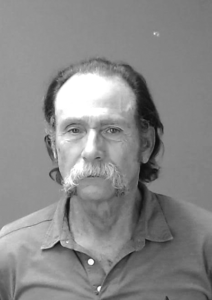
Prior to his release from prison, Marvin Dean Noor, 61, of Colusa, spent decades in maximum security for one of the most notorious racially motivated murders in Northern California.
“Marvin Dean Noor was released on parole on April 17, 2018, after having served 38 years on a first-degree murder conviction for the intentional and senseless killing of Jimmy Lee Campbell,” said Special Prosecutor Matthew Beauchamp, of the Colusa County District Attorney’s Office. “Campbell, a young black man, was shot in the back simply for being African American.”
Noor, who reportedly led a criminal life since he was 13, along with longtime friend James Thomas McCarter, and Noor’s girlfriend Dani Shope, were convicted of killing Campbell on the evening of Jan. 14, 1979, as he walked along Park Avenue in Chico after leaving the roller rink.
Campbell, who was deaf, would not have heard Noor’s car pull slowly up behind him as McCarter leveled a 30-30 rifle at his back and pulled the trigger; nor would Campbell hear the gunshot as the bullet tore through his left shoulder, broke a rib, and traveled into his heart, slicing his aorta.
Noor would later confess to police that he saw Campbell jerk, clutch his shoulder, and stumble a few steps, but that he sped the car away before Campbell fell, hitting his forehead on the railroad tracks and sprawling face up in death, as he would be discovered a short time later by a passing motorist.
According to news reports, the case would likely have gone unsolved but for the drunken and exuberant boasting of two of the culprits, who, using racial slurs, bragged about killing black people in Chico and Oroville.
Noor, who was 19 at the time, Shope, 24, and McCarter, 20, all of Oroville, had reportedly spent the day drinking and smoking pot, after getting the rifle from Noor’s mother’s home in Oroville to poach deer in the hills.
They had spent the afternoon shopping in Marysville and, by the time they decided to go hunting, it was late in the evening. Failing to shoot a deer, they looked for a cow to shoot, but failed to spot any in the darkness and steady rain.
It was Noor’s suggestion, at the urging of Shope to kill something, to hunt black people.
Later reports would say that Noor had a deep hatred for blacks from the many run-ins he had while locked up in the California Youth Authority as a juvenile. Noor, who had just been released from Preston a few months earlier, had a history of violence and was on probation for assault with a deadly weapon.
McCarter reportedly had black friends and had never been arrested but had been expelled from high school twice for offenses committed with Noor, who had the dominant personality.
Both McCarter and Noor would drop out of high school before graduating, leading lives they admitted revolved around drugs and alcohol. Shope had left her husband and children to live a carefree and wild lifestyle, reports said.
Already on his second bottle of rum after McCarter shot Campbell, Noor narrowly avoided a head-on collision on the road back to Oroville and crashed his Pontiac through a fence and into a field.
After passersby helped push the car out of the mud and back onto the road, the trio traveled into South Oroville, which had a large African American population. They soon spotted three young black men at a park.
This time, it was Noor’s turn to shoot, but he fumbled with the trigger. The men, who watched the Pontiac slowly approach and saw the long barrel of the gun pointed at them through the window, dropped to the ground.
Frustrated that he couldn’t fire, Noor sped off.
After midnight, three blocks from the park, Noor pulled slowly upon Michelle Knight, who was walking on Roseben Avenue with her purse in one hand and holding an umbrella with the other.
Noor called out to her, and she looked up. He fired. Knight screamed and crumpled to the ground as Noor sped away. Noor’s bullet missed but had reportedly passed so close to Knight’s cheek it left powder burns.
After dropping McCarter off a few blocks away, Noor and Shope drove around, shot out a few streetlights and at power poles, until deciding to go to Noor’s brother David’s home to tell him what they had done.
Noor’s brother was asleep, but his girlfriend let them in and heard the confession and the drunken couple’s exhilaration at what had transpired that night.
According to reports, Shope eagerly indicated that it would be “her turn next” to shoot.
The following morning, Noor and Shope returned the gun to his mother’s home and went on about their day.
Within 24 hours of Campbell’s murder, Noor, McCarter, and Shope had been arrested and were being integrated by police. David Noor’s girlfriend, Linda Hammersley, had called the police after hearing the evening news that a body of a man, shot with a large caliber weapon, had been found in Chico. The news had not disclosed his race. A neighbor of Noor’s brother had also called. She was awake when Marvin Noor and Shope bragged about killing a black man and a black woman, which she overheard through the thin walls of the adjoining apartments.
At the time of their admissions, Noor and Shope were unaware that Knight had not been hit and survived the attempt on her life.
New District Attorney Will Mattley, who was sworn in on Jan. 8, the week before Campbell was killed, swore to seek the death penalty, which had been reinstated in 1977 and went into effect on Jan. 1, 1979. The penalty for murder with special circumstances, such as killing a human being because of race, was death in San Quentin’s gas chamber. Noor, McCarter, and Shope would be the first to be charged for a hate crime and tried under the new law.
But Mattley’s confidence the case would hold waivered after defense attorneys repeatedly attacked many of the circumstances of Noor, Shope, and McCarter’s arrests, largely on hearsay evidence, and irregularities in the process.
Gridley District Court Judge Steven McNelis, who authorized the search warrants for Marvin Noor’s house, where he and Shope were arrested, and Noor’s mother’s home, where the gun was found, had also joined the police as an observer when the warrants were executed.
McCarter was arrested at his home late that same night without an arrest warrant, only after Noor and Shope implicated him for Campbell’s murder during questioning.
Under a gag order, the case progressed secretly through the courts, until one year after Campbell’s death, when Noor and McCarter pleaded guilty to first degree murder in a deal that dropped the special circumstance charge and the attempted murder of Knight.
The plea deal came with a 25-year-to-life sentence, if Noor and McCarter forfeited appeals, and an opportunity for parole. Shope had already pleaded guilty to second degree murder in exchange for testimony against the others and had been sentenced to only 15 years in prison.
The arrangement outraged Campbell’s family, who only learned about it from news reports after Noor and McCarter entered their pleas. With the gag order lifted, the ghastly details of the murder spread quickly in news outlets across the country. The deal for all three killers angered the NAACP, which questioned a dual system of justice. Would the deal have been reached if the races of the victim and perpetrators were reversed?
California Attorney General George Deukmejian also questioned the DA dropping the special circumstance charge and was asked by Assembly Speaker Leo McCarthy to investigate.
A year later, McCarter did appeal his conviction, hoping to get the hearsay and search warrant evidence thrown out, but the court upheld their validity and the manner of the searches, and affirmed there was sufficient probable cause for his arrest, based on creditable informants.
“Officers knew a racially motivated murder had occurred in Chico the night before and that another murder could have occurred in Oroville,” court records state. “Because of Shope’s statement indicating ‘her turn’ was next, officers could reasonably have believed that the senseless shooting would continue.”
Eventually, the murder and attempted murder of black people in Butte County would slip from peoples’ memory, and all three involved in the crime would eventually be released.
Noor, who violated his parole and served a short stint in Sutter County Jail, in 2022, was arrested again by CDCR parole officers on July 14, at his residence in Colusa, for using and possessing alcohol, which is prohibited by terms of his prison release.
His parole officer, Agent M. Taylor, said the state frequently checks on Noor, but he would not say why he is living in Colusa rather than his home county, where the crime occurred, and where there are better resources to help parolees successfully reenter society.
Noor’s release from prison and his presence in Colusa bothers Beauchamp.
“The State of California’s decision to release Noor is hard to reconcile with the depravity and cruelty of the underlying crime,” Beauchamp said. “Since being released from prison, Noor has violated his parole multiple times, including weapons violations.”
Beauchamp said the killer’s release is just another example of California’s failed public safety policies and agreed with Noor’s parole officer that Noor’s past criminal history and behavior while on parole places the community at risk.
“Colusa should not be a dumping ground,” Beauchamp said. “Noor, who is not from Colusa County, has no business being on parole in the city of Colusa.”
Sources: Chico News & Review; Chico Press-Enterprise; People v. McCarter (1981) California Court of Appeals Third District.