

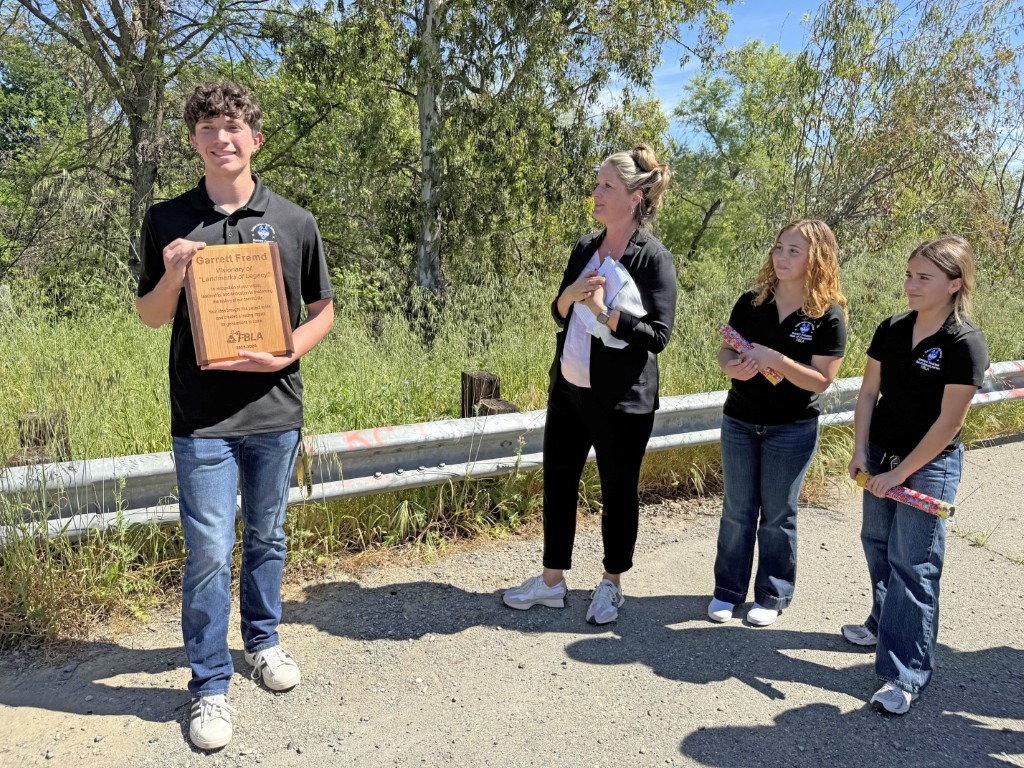
SUTTER, CA (MPG) – The stories were already there, written into the landscape of Sutter County, waiting to be brought into view. On March 25, Sutter Union High School Future Business Leaders of America gave those stories a voice, anchoring them in the places where they happened.
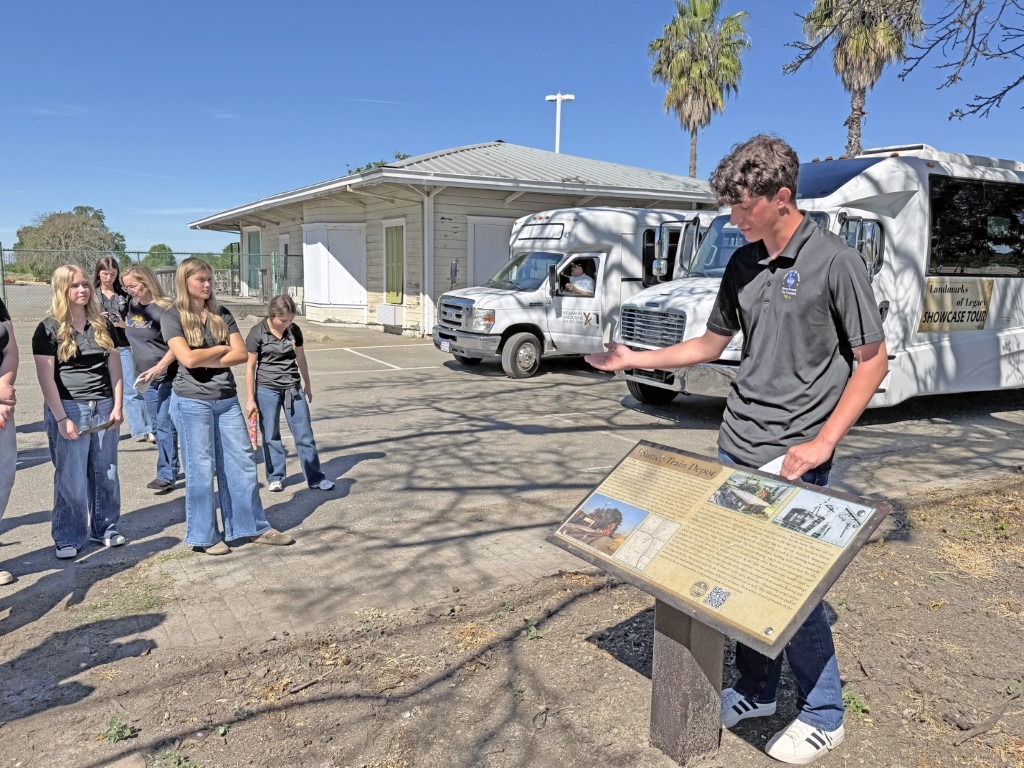
Garrett Fremd, chapter vice-president, guided visitors through Landmarks of Legacy, a network of permanent historical markers installed at sites across the county. Each location is identified by a student-designed sign, set in metal frames and anchored in concrete, intended to remain in place for decades and create a self-guided tour for the public.
“This isn’t just something we built for a competition,” Fremd said. “It’s something that’s going to stay here. People are going to walk through this and understand what came before them.”
At the former Sacramento Northern Railway depot in Sutter, now repurposed in the parking lot of Close Lumber, Fremd introduced the site before turning to the history behind it.
The tracks are gone, but the line once connected Yuba City, Meridian, Colusa and Live Oak, moving people and freight through an electric rail system that predated modern highways. Known originally as the Northern Electric, the railway ran on a three-rail system, with a center “hot rail” supplying power, before converting to diesel in the early 1940s.
The Landmarks of Legacy project marks sites including the train depot, Butte House Road, the Sutter Buttes, Long Bridge, Sutter Cemetery, the Butte Slough School in Meridian and Sunsweet Growers in Yuba City, each selected for its role in shaping the region.
From the start, Fremd said the goal was to take places people pass every day and make them visible again.
“We wanted people to actually see it, not just read it,” he said. “If you stand here and hear the story, it sticks with you.”
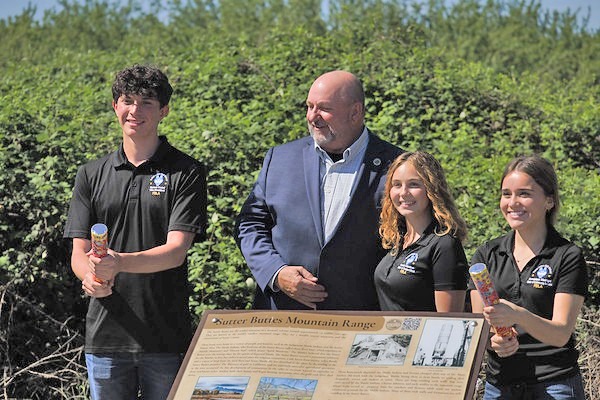
That work was shared across the team.
FBLA officers Scarlett Ocheltree and Dominique Madrigal were among those rotating through presentations, speaking at multiple stops and guiding visitors through different parts of the project.
At Sutter Cemetery, the story turned to the people behind the history.
One of the oldest and largest cemeteries in the county, it holds generations of residents, including veterans honored each year, Dolly Gray, an early 20th century left-handed Major League Baseball pitcher, and 14 unidentified victims of serial killer Juan Vallejo Corona, placed in a single grave and memorialized so they would not be forgotten.
At Butte House Road, the history focused on movement. Students described how the route once carried Native American tribes and later stagecoaches across one of the few elevated paths through land that flooded each winter.
At the Sutter Buttes, students shifted the focus to the landscape itself, tracing the mountain range from its origins as a dormant volcano to its use by the Maidu people and later periods of settlement and Cold War activity.
The marker at that site was sponsored by Sutter County Supervisor Jeff Boone, who joined the tour and listened as students and Fremd presented.
“What stands out is the ownership,” Boone said. “They’re not just repeating information. They understand it, and they’re passing it on.”
At the Butte Slough School site in Meridian, students described early rural education in Sutter County, when one-room schoolhouses served families spread across farming communities. The site, located on private property, reflects a time when students of different ages learned together and the schoolhouse often served as a gathering place for the surrounding community.
“There was a potbelly stove in the middle for heat, and a single tin cup that all the students shared for water,” Fremd said.
At Long Bridge, the focus turned to connection.
The crossing once carried commerce across Butte Slough, linking communities in a region where flooding could isolate entire areas.
Board of Supervisors Chairman Mike Ziegenmeyer spoke at the bridge about restoring the historic crossing for public use.
“I’d love to see this open again someday for people to walk and bike across,” he said. “It would bring Sutter and Colusa back together.”
Ziegenmeyer said efforts like the Landmarks of Legacy project play an important role in preserving local history, ensuring future generations understand how those connections were first built.
The project also includes a marker at a Sunsweet grower site, recognizing the cooperative’s role in shaping the region’s agricultural identity. Though not included in the shortened tour, the site reflects the project’s broader scope, connecting the county’s past to the industry that continues to define it today.
The Landmarks of Legacy project reflects months of work, from research at the Sutter County Museum to writing, design and installation of the markers. Students worked alongside campus programs and community partners to complete each site.
The same day as the tour, students learned their project ranked among the top eight in the state.
Next comes a live presentation before judges, where three students will present and answer questions about every part of the work. If successful, the team will advance to national competition in San Antonio.
FFA advisors Laurie Gidel and Katie Zwissig guided the project while allowing students to take the lead.
During the tour, Zwissig recognized Fremd’s leadership, presenting him with a plaque.
“This project started with Garrett’s vision,” Zwissig said. “He saw what this could be and stayed with it all the way through.”
The markers now stand across Sutter County, giving people a reason to stop, look and understand the stories that have always been there.
“This is something the community can connect to, because it’s their history,” Fremd said.
The project was supported by a network of community partners, including Yuba City Rotary, Sutter and Peach Bowl Lions and Early Risers Kiwanis, who joined the tour and helped make the effort possible.