

COLUSA COUNTY, CA (MPG) – The Colusa County Board of Supervisors approved a conditional use permit, developer agreement, and franchise agreement for the Janus Solar (RWE) project, following a public hearing on Feb. 25 that lasted nearly six hours.
The controversial project, in development for years, sparked fierce debate among those for and against utility-scale solar energy projects in Colusa County.
Paul Favero, 95, who owns the property with his son said the solar facility, which will consume about 1.2 square miles of land, is just a small part of their 8,500-acre cattle ranch. The project will include 197,000 solar panels and a battery storage facility that will be located on 768 acres of 1,024 total, about 6.5 miles southwest of Williams on Spring Valley Road.
Opponents cited distinct reasons for considering commercial solar a high-risk business, particularly the potential for wildland fire in the dry grassland and foothills. They also felt the project would devaluate their property, take agriculture land out of production, create unwelcome wildlife patterns and habitat, and increase temperatures across the globe.
Board Chair Daurice Kalfsbeek Smith, the lone dissent in the Feb. 25 decision, said she could not support the project until Colusa County amends its General Plan with a clear zoning interpretation for utility structures, which would require a separate process, beginning with the Colusa County Planning Commission, which, with two recusals, failed to reach a consensus on the project in January.
Colusa County officials have discussed Janus Solar’s impact since it was proposed, with staff assuring the Board of Supervisors that it has been extensively reviewed.
“The draft (Environmental Impact Report) identified potential impacts and has developed a series of mitigation measures in order to ensure that the prospective project would not be detrimental to the health, safety, peace, morals, comfort, or general welfare of persons residing in the area,” said Colusa County Community Development Director Xzandrea Fowler. “The Final EIR also contains responses to the comments received on the Draft EIR and several minor amendments to further reduce potential impacts. In addition, staff has recommended additional conditions of approval within the Use Permit to further ensure that the project would not be detrimental to other properties or residents in the area.”
Despite opposition from neighboring landowners, support for the Janus Solar has been overwhelming, after project officials actively engaged the community, going door-to-door and holding town hall meetings.
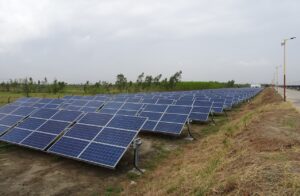
project, Image by Bishnu Sarangi from Pixabay
Far more people spoke in favor of the project than against it, citing Colusa County’s poor economy, the burden of property tax subsidies for Williamson Act land on local taxpayers, and other county budget constraints that have left public services lacking.
“As a retired resident of Colusa County, I support the Janus Solar Project because of the long-term benefits it will bring to our community,” said Aricka Acevedo, in one of many letters or comments received during the public hearing process. “It offers economic revitalization through job creation, sales tax revenue, and property tax contributions that will support our schools, public services, and infrastructure – without increasing taxes on residents. This project also ensures that agriculture will continue to thrive while making space for economic diversification. The opportunity Janus Solar provides is too important to pass up.”
The money the project will bring – and the renewable energy that Janus Solar will produce toward California’s clean energy goals – won out. Fowler said the project will generate about $15.9 million in one-time economic activity and generate $788,000 in one-time fiscal revenues to the county.
“On an ongoing basis, on average the total amount of property taxes that would be collected would be approximately $6,159,444,” Fowler said. “This would average some $175,984, or approximately $157,484 a year more than the current property taxes for the property – with property tax payments to the county increasing from $4,900 to approximately $75,583 a year on average.”
For each life of the project, the county would receive a $100,000 public service payment, a $30,000 agriculture land preservation fee, and a $52,000 franchise fee payment. Additionally, the project will provide $45,000 annually ($15,000 each) for the Maxwell, Williams, and Arbuckle Park and Recreation Districts, officials said.
“I think that this project and this company jumped over every obstacle that we’ve put in their path,” said Supervisor Merced Corona. “I think they’ve been responsive to everything that we’ve asked them…They actually went above and beyond.”
Corona, who made the motion to approve the project, said electric generation is the future of the country and world, and that the industry will only continue to get better and become more efficient.
“I know we are going to learn from this, but I think voting against this project would be shooting ourselves in the foot. I think it’s going to be a win-win for the community – for the county.”
Supervisors Janice Bell and Randy Wilson, who replaced Gary Evans on the solar ad hoc committee, also voted in favor. Supervisor Kent Boes recused himself from the discussion due to his remote financial interest as a volunteer firefighter for the Williams Fire Protection Authority, which will receive $300,000 a year from the project for added fire protection services.
Alex Salas, Janus Solar (RWE) lead development manager, said the conditional use permit is just the first step toward project completion.
“It’s a long process and a lot of information to take in,” Salas said.
Salas said the solar project will be in place for 35 years, with a total economic benefit to exceed $38 million, after which the panels and battery storage facility will be decommissioned, removed, and the land restored to its original state.
RWE is a 100-year-old German energy company that generates and trades electricity in Europe, the Asia-Pacific region, and the U.S. The company is also working on a similar project in Kern County.