

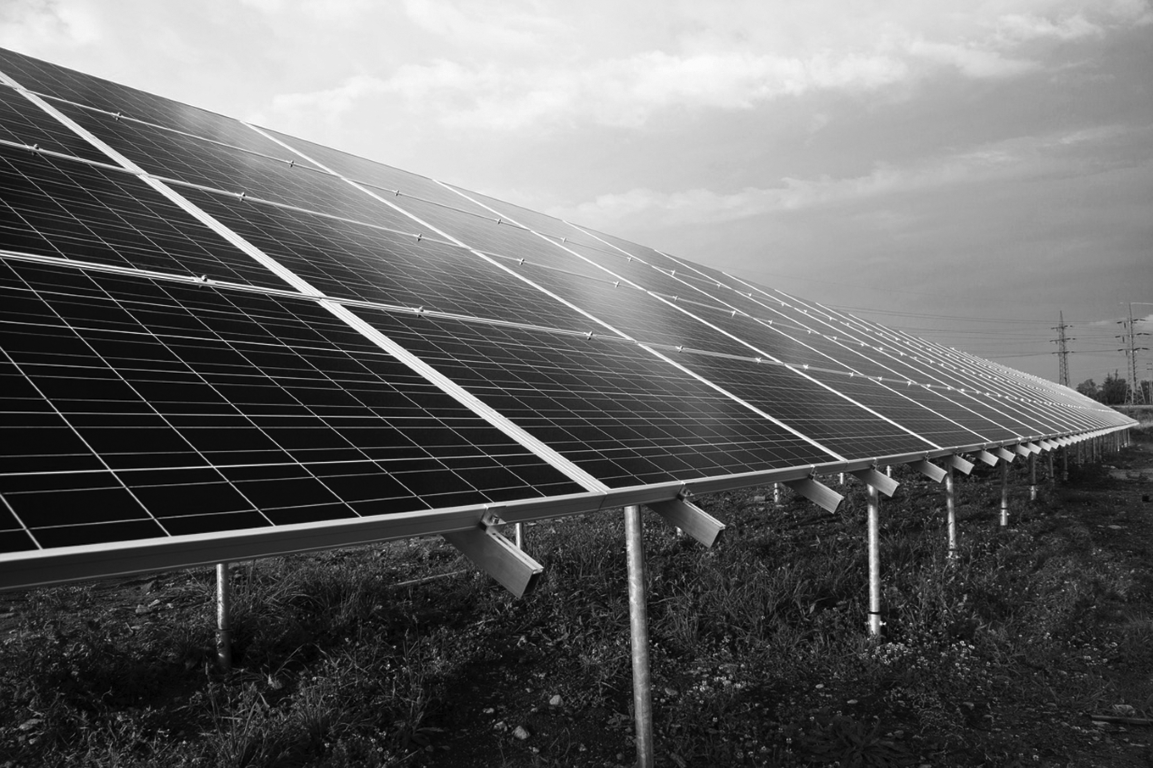
COLUSA COUNTY, CA (MPG) – On a 3-0 vote, the Colusa County Planning Commission, against the recommendation of county staff, denied certifying an Environmental Impact Report and conditional use permit that would have allowed for the construction of a controversial solar electricity generation project about 6.5 miles southwest of Williams.
Janus Solar applied for the permit to construct, operate, and maintain a photovoltaic facility with 197,000 solar panels and battery storage system about 1.6 miles south of Spring Valley Road.
The project has been in the works since 2020 but was met with fierce opposition, mostly from neighboring landowners who feared such a facility would lower property values; block scenic views; create an uncertain or possibly toxic environmental future; would be abandoned after its useful life without proper decommissioning; violate the intent of the Colusa County General Plan and Williamson Act; and – for the next three decades – change the landscape of the land, which has historically been used as grazing for livestock.
Colusa County’s General Plan recognizes that agricultural land is the county’s “greatest natural asset” and recommends taking all appropriate measures to restrict the conversion of agricultural lands, which accounts for 75 percent of the county’s land mass, to non-agricultural uses.
Colusa County Community Development Director Greg Plucker, whose office prepared the environment analysis, said the project could only be approved if the project is consistent with the General Plan and zoning ordinance.
“Based on our analysis and what I presented, I believe it is,” Plucker said.
Plucker said the EIR addressed some three dozen mitigations that were designed to reduce impacts on the surrounding area.
“In addition to those mitigations, there are additional conditions in the use permit that, if adopted, would become effective,” Plucker said. “And those are intended for the project to be good neighbors and avoid impacts to neighbors.”
Proponents of the Janis Solar Project said its development would generate increased property taxes for the county, provide $300,000 in annual funding to the Williams Fire Department; provide $15,000 each in annual funding to Maxwell Parks and Recreation District, Arbuckle Parks and Recreation District, and City of Williams Recreation Department; create 200 temporary construction jobs; and provide a new source of clean energy for California to help meet the pending mandates to use renewable energy sources.
“I support this type of project…,” said Richard Moore, of Maxwell. “This is good for this county. There needs to be more projects like this.”
Moore said he hoped county officials would support the project as much as they support Sites Reservoir and supported the construction of a PG&E power station near his property.
“There are a lot of benefits that are coming from this to the county that would not otherwise be here,” Moore said. “If we had more of these, it would decrease the tax burden on the residents of the county.”
Moore, a rice farmer, said the county needs to diversify its economic base and cannot be entirely dependent on agriculture, as reduced water allocations proved last year.
“If not for the substantial rain this year, the county coffers would be even worse off,” Moore said. “There is nothing guaranteed with this weather or with water, unfortunately.”
Opponents of the project, and there were many at the Aug. 2 public hearing, were mostly concerned about potential groundwater contamination from batteries, the change in last use from agriculture to commercial solar energy production, and the project being in a high fire danger area.
“It’s zoned for farming and livestock grazing,” said Matt Farrini. “That’s what it’s been since the beginning of time. I don’t see what benefit this is to our county. I understand they are basically giving (the county) a peace offering of $145,000 but you would be throwing all these people right under a bus who have to work and live around that every day. And what guarantees are there if (project owners) don’t pay it.”
Colusa attorney David Nelson, who represents several opponents, raised issues he found problematic with the project, including the landowner currently reaping tax benefits by binding the land to agricultural use under a Williamson Act contract.
Nelson also disagreed with the analysis that the project would be compliant with the county’s General Plan, which allows solar projects in an agriculture zone if they are for on-site power generation.
“That makes sense,” Nelson said. “If you have a dryer storage facility, having an alternate energy source makes sense. If you have a large ag well, having solar power makes sense.”
After naming several other instances where on-site solar generation makes sense for agriculture, Nelson was adamant that this project “is not, in any way, related to an agricultural use.”
“This project is commercial/industrial,” Nelson said. “They are going to produce energy. They are going to sell it through PG&E or other power companies, and it’s gone. It’s not here to be utilized within the county. It is a commercial operation proposed in an agricultural zone.”
With county staff and the public split on the project, Planning Commission Chairman John Troughton said he based his opposition entirely on the size of the project, the irregular use of agricultural land, and the removal of land from the Williamson Act, which is designed to preserve open space and farming.
“I truly think this is an intrusion into this area,” Troughton said.
The Planning Commission will certify their denial of the EIR and Conditional Use Permit with a Resolution at their September meeting.
The project developer will then have 10 days to appeal the Planning Commission’s decision to the Colusa County Board of Supervisors.