

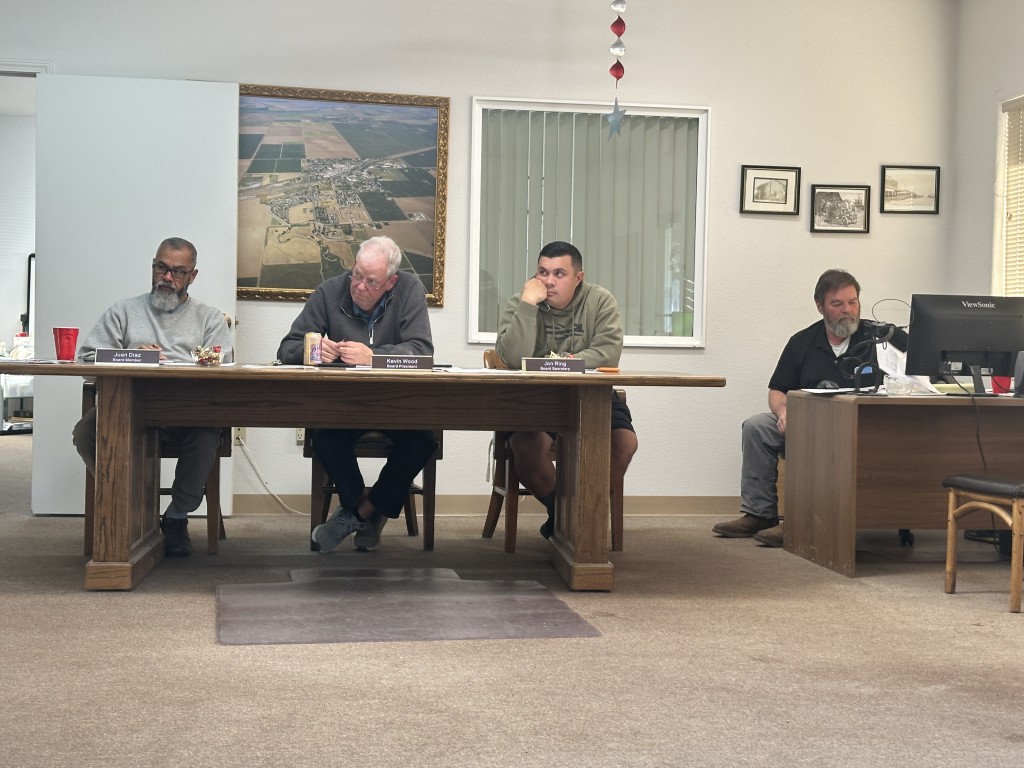
ARBUCKLE, CA (MPG) – At its first meeting since its town hall in late January, the Arbuckle Public Utility District board focused on tightening its finances, controlling operating costs and accelerating plans to avoid a potential wastewater emergency this spring.
Board members questioned whether current monthly revenues are sufficient to sustain routine operations without drawing from restricted county reserves. After reviewing financial reports, Board President Kevin Wood said the district must determine whether it can cover expenses between meetings.
“If we’re not able to pay our current bills with the money coming in, we need to figure out why,” said Wood.
The district reported approximately $94,000 on hand after accounting for February payroll and bills. That figure included about $27,000 earmarked for employee retirement contributions. Directors agreed to defer the retirement payment for at least one month to preserve cash while staff prepare a clearer operating budget.
Wood directed staff to produce a full year breakdown of monthly expenses, separating routine operating costs from emergency repairs and capital improvements. Several directors said the district needs a predictable monthly spending target so it can determine when transfers from reserve accounts are truly necessary.
“Give us a monthly budget so we know what we should be spending,” said Director Juan Diaz.
Sewer system issues also drew attention. Crews recently cleared a blockage in a downtown alley and discovered significant gravel accumulation in a section of line with no intermediate access point. The district now must jet that stretch regularly to prevent backups.
Directors also raised concerns about grease disposal from a nearby commercial kitchen that operates behind a retail property. Director Jonathan Ring called for immediate follow up with county officials if grease is entering the system improperly.
“I don’t really care whose fault it is,” said Ring. “It needs to stop.”
In an effort to reduce strain on the wastewater system, the board also discussed asking local car wash operators to voluntarily suspend or limit operations through November. Wood said commercial car washes represent some of the district’s highest water users and even modest reductions could significantly lower inflows to the treatment ponds.
Rather than issuing a formal demand, Wood said they plan to meet with operators to explain the situation and request voluntary cooperation.
Beyond day-to-day operations, the board is moving to secure emergency funding from the State Water Resources Control Board. A formal letter is being prepared requesting access to funds to help offset the cost of hauling wastewater if pond capacity becomes strained later this year.
The board also discussed potential land acquisition for a future treatment facility and authorized preliminary outreach to property owners. Wood said negotiations must begin soon if the district hopes to have an alternate solution online by late summer.